
Introduction
Mabon is widely used in contemporary Pagan communities as the name for the Autumn Equinox festival. The term suggests deep “Celtic” antiquity. The historical record, however, tells a more complex story. This essay critically examines the origins of “Mabon,” distinguishes medieval Welsh myth from modern festival practice, and evaluates what the equinox means in Britain today. It draws on peer-reviewed scholarship in history, folklore, religious studies, and archaeoastronomy.
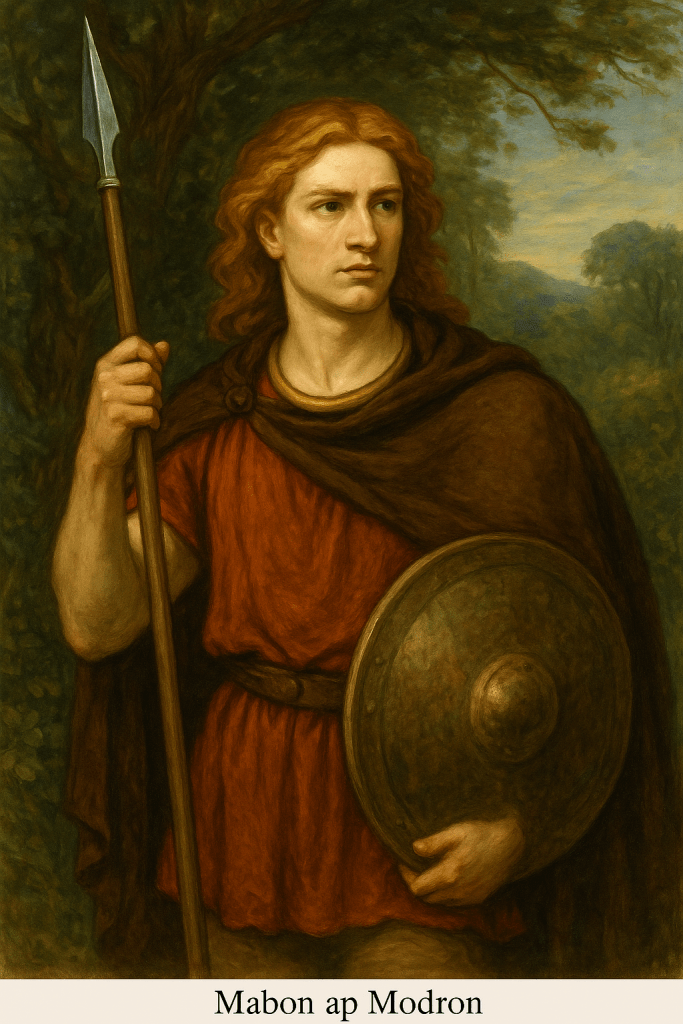
1. Mabon in medieval sources: Mabon ap Modron
In medieval Welsh literature, Mabon ap Modron [“Divine Son of the Divine Mother”] appears in narrative lists and quests, most famously in Culhwch ac Olwen, and is sometimes associated etymologically with the Gaulish deity Maponos and the mother-goddess Matrona (Davies, 2007; Bromwich, 2006). These texts do not link Mabon to harvest, the equinox, or a calendrical festival. They situate him within heroic mythic cycles rather than an agrarian ritual year. (Davies, 2007; Bromwich, 2006).
2. The Autumn Equinox in the historical British ritual year
Evidence for pre-modern British observance of the equinox as a named feast is thin. British seasonal customs in late summer and early autumn revolve around harvest practices, church Harvest Thanksgivings from the nineteenth century (from 1843 onwards), and local “Harvest Home” celebrations, rather than equinox rites per se (Hutton, 1996). The most detailed historical synthesis of the British ritual year treats “Harvest Home” as a cluster of folk customs and parish occasions whose timing varied with local agriculture and the church calendar [not the equinox itself] (Hutton, 1996).
Archaeoastronomy also cautions against assuming the equinox had uniform prehistoric ritual salience. While some monuments align on solar events, equinox targeting is difficult to demonstrate with confidence, and interpretations are contested (Ruggles, 1997; 1999). In other words, a pan-British “ancient equinox festival” is not supported by current evidence.
3. From Welsh hero to Wiccan calendar: how “Mabon” became a festival name
The modern festival name “Mabon” emerged within twentieth-century Paganism. The eight-fold “Wheel of the Year” that combines the solstices and equinoxes with the four Gaelic fire festivals coalesced in mid-century British Pagan and Druid circles (notably the networks around Gerald Gardner and Ross Nichols) and then spread transatlantically (Hutton, 2008). Within this system, the specific naming of the Autumn Equinox as “Mabon” was introduced in the United States during the 1970s. Ronald Hutton’s peer-reviewed analysis notes that the liturgy shaping these festival names “was largely the work of one man, Aidan Kelly,” who drew on literary sources; Hutton adds that selecting “Mabon” for the equinox appears “preposterously inappropriate” to British scholars, since Mabon is a personal name from Welsh narrative rather than a harvest god (Hutton, 2008).
Parallel Druid currents preferred a different nomenclature. Revived Druid orders, drawing on eighteenth–nineteenth-century Welsh romantic antiquarianism, adopted Welsh-styled names such as Alban Elfed for the Autumn Equinox, part of a broader poetic vocabulary that owes much to Iolo Morganwg and later reformers like Ross Nichols (Hutton, 2009). These terms are products of the Druid revival rather than attested medieval holy-day names (Hutton, 2009; see also the Welsh scholarly portal noting bardic use of Alban Elfed in revived Eisteddfod contexts).
Interim conclusion: the festival name “Mabon” is a late-twentieth-century innovation within modern Paganism. Its authority lies in contemporary religious creativity, not in continuous pre-Christian usage.
4. What “Mabon” means in contemporary Paganism
Ethnographic and religious-studies scholarship shows that equinox observance today focuses on themes of balance, reciprocity with the living world, gratitude for the year’s “second harvest,” and ethical attention to food systems and land (Magliocco, 2004; Harvey, 2007; Pike, 2001; York, 2003). Practitioners deploy seasonal rites to build community identity and negotiate personal transformation. The equinox’s equal light and dark readily symbolise equilibrium, evaluation of the year’s work, and preparation for winter. These meanings are liturgically coherent even if they are not medieval survivals.
Within Wiccan mythopoesis, equinox rites are sometimes framed through cyclical narratives of growth, ripening, and decline that were influenced historically by comparative folklore and high-Victorian theories of “dying and rising” vegetation deities. Scholars have demonstrated both the inspirational power and the historical limits of such narratives when retrojected into “Celtic antiquity” (Hutton, 1999; Magliocco, 2004).
5. Authenticity, invention, and the uses of the past
The “Mabon” debate sits squarely within wider scholarship on “invented traditions.” Hobsbawm and Ranger define invented traditions as modern practices that claim or imply continuity with a suitable past (Hobsbawm and Ranger, 1983). Modern Pagan calendars illustrate how invention can be creative rather than spurious. In Hutton’s words, contemporary Pagan festivals are an “ideal case study” for how seasonal calendars are reshaped in modernity: they integrate fragments of historical lore, literary imagination, and new ritual needs into cohesive frames that feel old because they work symbolically in the present (Hutton, 2008; cf. Hobsbawm and Ranger, 1983).
Critically, naming the equinox “Mabon” also raises questions of cultural reference. Welsh philology and medieval studies do not support Mabon as a harvest god, hence scholarly discomfort with the label. Many Druids therefore prefer Alban Elfed, a nineteenth-century revival coinage that at least names the season in Welsh rather than repurposing a mythic hero. The choice between “Mabon” and “Alban Elfed” is a live identity debate among practitioners about accuracy, aesthetics, and lineage. Historically, neither label is ancient, yet both are intelligible within today’s ritual grammars.
6. A British social history perspective
If we set aside the festival name and ask what Britons historically did at this time of year, the record points to harvest customs and, from 1843 onward, to Anglican Harvest Thanksgivings associated with figures like the Revd Robert Hawker, which helped consolidate “Harvest Festival” in parish life. These practices are calendar-adjacent to the equinox but are not defined by it. Modern Pagan “Mabon” overlays this landscape with a spiritual ecology that is consciously constructed rather than recovered intact from the Middle Ages (Hutton, 1996; see also church-history summaries on nineteenth-century Harvest services).
Conclusion
Historically, there is no evidence for a pre-Christian British festival called “Mabon” at the equinox. The medieval Mabon ap Modron belongs to literary tradition, not to a documented harvest rite. The equinox itself had limited explicit ritual marking in British folk custom compared with harvest practices and later church festivals. The name “Mabon” is a modern, largely American Wiccan innovation of the 1970s that has since become widespread. Its contemporary meanings, balance, gratitude, reciprocity, ethical relation to land, are authentic to present communities, even as the label lacks medieval pedigree. Understanding Mabon therefore requires both historical clarity and a nuanced appreciation of how religious traditions are made and remade.
Notes on scope and sources
- The essay differentiates between medieval literary figures and modern ritual calendars. The peer-reviewed article by Hutton (2008) is the crucial source that documents the 1970s naming of “Mabon” and critiques its appropriateness.
- The historical survey of British harvest customs and church Harvest Festivals relies on Hutton’s Oxford monograph and associated scholarship, which locate autumnal rituals in harvest practice rather than equinox observance.
References
Bromwich, R. (2006) Trioedd Ynys Prydein: The Triads of the Island of Britain. 3rd edn. Cardiff: University of Wales Press. Religion Media Centre
Davies, S. (2007) The Mabinogion. Oxford: Oxford University Press. global.oup.com
Harvey, G. (2007) Listening People, Speaking Earth: Contemporary Paganism. 2nd edn. London: Hurst. Google Books
Hobsbawm, E. and Ranger, T. (eds) (1983) The Invention of Tradition. Cambridge: Cambridge University Press. Cambridge University Press & Assessment
Hutton, R. (1996) The Stations of the Sun: A History of the Ritual Year in Britain. Oxford: Oxford University Press. Oxford Academic+1
Hutton, R. (1999) The Triumph of the Moon: A History of Modern Pagan Witchcraft. Oxford: Oxford University Press. Taylor & Francis Online
Hutton, R. (2008) ‘Modern Pagan Festivals: A Study in the Nature of Tradition’, Folklore, 119(3), pp. 251–273. Taylor & Francis Online+1
Hutton, R. (2009) Blood and Mistletoe: The History of the Druids in Britain. New Haven, CT: Yale University Press. reviews.history.ac.uk
Magliocco, S. (2004) Witching Culture: Folklore and Neo-Paganism in America. Philadelphia: University of Pennsylvania Press. University of Pennsylvania Press
Pike, S. M. (2001) Earthly Bodies, Magical Selves: Contemporary Pagans and the Search for Community. Berkeley: University of California Press. University of California Press
Ruggles, C. (1997) ‘Whose Equinox?’, Journal for the History of Astronomy, 28, pp. 93–101. SAGE Journals
Ruggles, C. L. N. (1999) Astronomy in Prehistoric Britain and Ireland. New Haven, CT: Yale University Press. Internet Archive
York, M. (2003) Pagan Theology: Paganism as a World Religion. New York: New York University Press. NYU Press
 Curious Femme
Leave a comment