
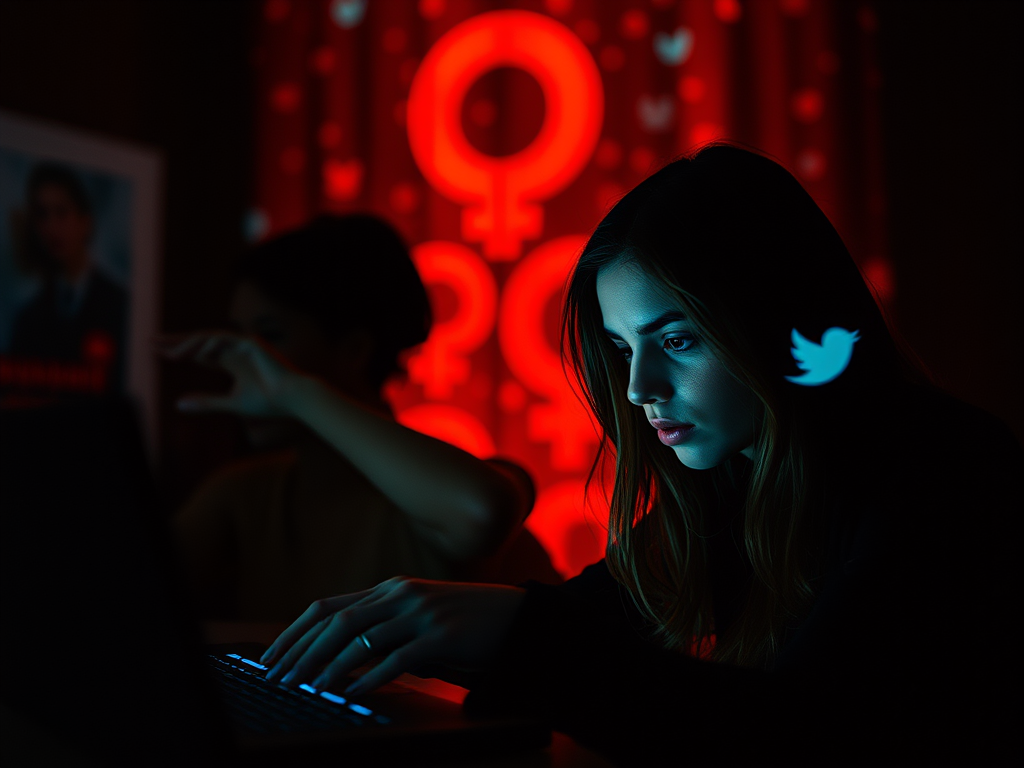
In the vast expanse of the digital age, the internet has become a space of limitless potential, offering communication, education, and activism platforms. It serves as a tool for empowerment, allowing individuals to connect across boundaries, access vast reservoirs of knowledge, and mobilise for causes that matter. Social media, blogs, and other online platforms have amplified marginalised voices, creating communities that challenge societal norms and advocate for equity.
Yet, beneath these positive transformations, the internet harbours darker undercurrents. One of the most pervasive and insidious threats is online misogyny. This digital hostility takes many forms, from derogatory comments and sexist jokes to coordinated harassment campaigns and explicit threats of violence. Women—particularly those who speak out on contentious issues or occupy public-facing roles—become targets of abuse designed to silence and intimidate.
For example, Diane Abbott, the first Black woman elected to the UK Parliament, has faced a relentless barrage of online abuse, including threats of violence and racialised misogyny. A study revealed she received almost half of all abusive tweets directed at female MPs in the six weeks leading up to the 2017 UK general election. Similarly, journalist Caroline Criado-Perez was targeted with rape and death threats after campaigning to feature women on British banknotes. The onslaught was so severe that it led to the arrests and convictions of some perpetrators.
In the United States, feminist blogger Amanda Marcotte and activist Jessica Valenti have been harassed with vile messages and threats, often targeting their physical appearance, sexuality, or families. When Marcotte worked for John Edwards’ presidential campaign, she faced rape threats and other forms of harassment simply for expressing feminist views online. Likewise, Valenti was subjected to similar abuse after participating in a meeting with President Bill Clinton, with critics focusing on her appearance rather than her advocacy.
The experiences of Malala Yousafzai, the youngest Nobel Peace Prize laureate, further underscore this issue. Despite her global acclaim for advocating girls’ education, she has faced severe online abuse, including death threats and attempts to discredit her activism.
These examples highlight how online misogyny disproportionately targets women in leadership, activism, and public discourse, aiming to undermine their contributions and dissuade others from speaking out. It is a stark reminder that misogyny in digital spaces is not confined to the virtual world but has real-life consequences for women’s safety and participation.
The Rise of Online Misogyny
Online misogyny manifests through targeted harassment, threats, and systemic silencing of women, particularly those who dare to express themselves in public or political arenas. This hostility can be pervasive and deeply personal, ranging from insults and degrading comments to orchestrated campaigns that weaponise anonymity and digital platforms. Women who engage in discussions about feminism, politics, or social justice often find themselves at the Centre of these attacks, as their visibility becomes a lightning rod for misogynistic vitriol.
Research highlights the normalisation of such abuse, with 46% of women worldwide having reported experiencing sexist or misogynistic comments online. However, this figure only reflects reported cases. The actual prevalence is likely much higher, as many women do not report these attacks due to fear, stigma, or a lack of faith in the authorities’ ability to take meaningful action. This silence perpetuates the problem, allowing abusers to operate with impunity and normalising misogyny in digital spaces.
The nature of online abuse often escalates beyond derogatory comments. Explicit threats of violence, including rape and death threats, are common, as are invasive behaviours like doxxing—publishing personal details such as home addresses or phone numbers to incite offline harassment or harm. A particularly invasive form of online abuse involves the non-consensual sharing of intimate or private images, often referred to as “revenge porn.” This weaponisation of personal images is designed to humiliate and silence women, undermining their autonomy and safety.
One of the most pervasive and trivialised forms of harassment is the unsolicited sending of explicit images, commonly known as “dick pics.” These uninvited and graphic intrusions are not only a violation of personal boundaries but also a method of exerting dominance and control over women in digital spaces. Despite their frequency, such acts are often dismissed or downplayed, contributing to a culture that tolerates the sexual harassment of women online.
The “Kill List”: A Chilling Example
Carl Miller, a researcher at the Centre for the Analysis of Social Media, starkly highlighted the chilling reality of online misogyny. He uncovered an online “kill list” targeting women—particularly activists, journalists, and public figures—who were outspoken on issues such as feminism and social justice.
This list, hosted on extremist forums, contained the names of multiple women alongside instructions for how they should be murdered. The individuals targeted were singled out for their feminist stances or work challenging patriarchal structures. Disturbingly, the list grew over time, reflecting the intensifying hostility faced by women in public life.
The “kill list” demonstrates the tangible danger that online misogyny poses. It is not merely a series of isolated incidents but a coordinated and escalating threat with serious offline consequences. The mere existence of such a list shows how online spaces can become incubators for extremist violence.
These forms of abuse severely erode women’s ability to participate freely and equally in digital spaces. Many women, wary of becoming targets, reduce their online presence, self-censor, or withdraw entirely from public discourse. This systemic silencing not only stifles individual voices but also perpetuates broader gender inequities, denying society the full spectrum of perspectives necessary for a truly inclusive digital environment. Online misogyny, therefore, is not merely a collection of isolated incidents but a structural barrier to gender equality and justice in the digital age.
Why Is Online Misogyny Happening? Is It Just Algorithms?
Social media algorithms undoubtedly play a significant role in fueling online misogyny, but they are not the sole culprit. The issue is multifaceted, rooted in societal, technological, and economic dynamics that converge to create an environment where misogyny thrives.
Platforms and Algorithms: Catalysts of Abuse
Social media algorithms amplify misogynistic content, disproportionately exposing younger audiences to toxic ideologies. These algorithms are designed to maximise engagement, prioritising controversial, polarising, or sensationalist content because it garners more clicks, comments, and shares. The result is a feedback loop where misogynistic posts receive higher visibility, attracting more attention and reinforcing harmful attitudes. Platforms profit from this engagement, even as it creates hostile environments.
Algorithms, however, are only part of the equation. The root causes extend deeper, reflecting broader cultural and structural issues.
Cultural Normalisation of Misogyny
Online misogyny mirrors long-standing offline inequalities and patriarchal norms. The internet provides a platform for the same discriminatory attitudes that have historically marginalised women; only now are these attitudes amplified and anonymised. Misogynistic ideologies, like those found in the manosphere, draw on pre-existing cultural narratives that devalue women and promote male dominance.
The Anonymity Factor
The relative anonymity of the internet emboldens individuals to express hatred and aggression they might not reveal offline. This lack of accountability enables perpetrators to target women with impunity, fostering a culture where harassment becomes normalised. The anonymity also facilitates the growth of toxic subcultures where misogyny is celebrated and rewarded.
Economic Incentives
Profit motives drive online platforms, and sensationalism often translates into revenue. Controversial content, including misogynistic posts, attracts clicks, generates ad revenue, and keeps users engaged. This economic structure disincentivises platforms from aggressively tackling harmful behaviours, as doing so might reduce user activity.
Weak Governance and Enforcement
Laws and regulations have not kept pace with the rapid evolution of the digital landscape. Many governments lack the frameworks or political will to address online abuse effectively. Simultaneously, social media companies often deflect responsibility, framing themselves as neutral platforms rather than active participants in curating content.
Intersectionality and Vulnerable Targets
Women who belong to other marginalised groups—such as women of colour, LGBTQ+ women, or women with disabilities—often face compounded abuse. Misogyny intersects with racism, homophobia, and ableism, intensifying the harassment experienced by these groups. Platforms and algorithms, primarily built by and for privileged groups, often fail to account for these intersecting vulnerabilities.
A Vicious Cycle
These factors collectively create a vicious cycle: cultural biases feed into technological systems, amplifying these biases and perpetuating the very discrimination they reflect. Misogynistic content drives engagement, which incentivises platforms to overlook the harm, perpetuating an environment where abuse is normalised.
Beyond Algorithms: A Societal Reckoning
To truly address online misogyny, society must confront both the technological and cultural factors at play. While reforming algorithms and holding platforms accountable is critical, broader changes are needed to challenge societal norms, enforce accountability, and ensure that digital spaces are safe and equitable for everyone. The question remains: how can individuals, governments, and platforms work together to break this cycle of abuse?
The “Manosphere” and Digital Radicalisation
The manosphere—a loose network of online communities rooted in anti-feminist and misogynistic ideologies—has become a powerful incubator for harmful narratives about women and masculinity. Figures like Andrew Tate exemplify the way influential voices exploit this space, targeting vulnerable men with promises of empowerment while simultaneously promoting toxic ideas that frame women as inferior and subservient. These narratives are far from isolated; they shape and reinforce broader cultural attitudes that undermine gender equality.
Figures Like Andrew Tate: Exploiting Vulnerability for Influence
Andrew Tate, a self-proclaimed lifestyle guru, has cultivated a vast following among young men through social media and online courses like “Hustler’s University.” Positioning himself as an antidote to modern societal challenges, he promises wealth, success, and dominance, all while promoting misogynistic ideologies. His content frequently dehumanises women, suggesting they are primarily valued for their looks or utility to men. By packaging these ideas alongside self-help rhetoric, Tate has effectively mainstreamed misogyny under the guise of personal development.
Tate’s influence highlights how figures in the manosphere exploit young and vulnerable men. Many followers are drawn to his message because they feel disillusioned or alienated by societal expectations. Tate’s content provides them with a community and a sense of belonging while simultaneously validating their frustrations through misogynistic explanations. His messaging often includes conspiracy-like assertions, such as claims that feminism is part of a broader effort to emasculate men. This approach resonates with those who feel left behind in a rapidly changing world.
The Impact on Young Men and Vulnerable Individuals
The manosphere thrives on vulnerability, targeting men struggling with loneliness, low self-esteem, or economic insecurity. These platforms offer seemingly simple solutions to complex problems, blaming feminism and women for societal issues while promoting hyper-masculine ideals. For example:
- Hyper-Masculine Success Models: Tate and others glorify wealth, physical strength, and sexual dominance, often showcasing luxury lifestyles filled with fast cars, private jets, and women. This creates unrealistic standards for young men to emulate, feeding insecurity and perpetuating cycles of inadequacy when they fail to achieve these ideals.
- Reinforcing Aggression: Many manosphere figures encourage followers to view aggression and control as virtues. The glorification of power dynamics in relationships promotes abusive behaviours and normalises the exploitation of women.
- Radicalisation into Hate Groups: The manosphere’s rhetoric frequently overlaps with extremist ideologies, including white supremacy and far-right politics. Vulnerable men who begin by watching self-help videos may find themselves drawn deeper into radicalised communities.
Echo Chambers and Their Role in Radicalisation
Online communities such as Reddit threads, Discord servers, and YouTube channels create echo chambers where harmful attitudes are validated and amplified. Within these spaces, dissenting voices are silenced or excluded, fostering environments where extremist beliefs flourish. These dynamics have been studied extensively, with clear evidence demonstrating their role in radicalisation.
Evidence of Echo Chambers in Online Communities
Reddit Communities
Research published in New Media & Society explored the discourse in r/TheRedPill, a subreddit infamous for promoting misogynistic ideologies. The study revealed how community norms are enforced through upvotes and downvotes, ensuring that harmful ideas dominate discussions. Members use adversarial language to frame women as adversaries, fostering a collective identity rooted in hostility.
Despite its ban in 2020 for violating Reddit’s policies on harassment, similar subreddits have emerged under different names, perpetuating the same toxic narratives. These spaces demonstrate the persistence of misogynistic subcultures and their ability to adapt to platform enforcement efforts.
Discord Servers
Private Discord servers have become hubs for radicalisation, particularly for movements like the incels (involuntary celibates). Investigations by Motherboard and the Centre for Countering Digital Hate uncovered how these servers are used to share explicit misogynistic content, glorify acts of violence, and encourage attacks on women. For example, discussions often idolise figures such as Elliot Rodger, the Isla Vista killer, describing him as a “hero” and validating his violent actions.
By operating in closed environments, these servers evade scrutiny, allowing extremist ideologies to proliferate unchecked.
YouTube Channels
YouTube’s recommendation algorithms have been shown to inadvertently direct users towards extremist content. A 2019 study by Data & Society revealed that viewers searching for seemingly innocuous content, such as dating advice, are often led to videos by influencers like Andrew Tate or Fresh & Fit. These creators blend self-help rhetoric with overt misogyny, subtly introducing harmful ideas under the guise of empowerment.
The New York Times documented the experience of Caleb Cain, a young man who described being “sucked into” the alt-right pipeline through YouTube’s recommendations. Starting with motivational content, he found himself exposed to increasingly toxic ideologies, mirroring the experiences of many young men drawn into manosphere communities.
Exclusion in Online Communities
Subreddits like r/MGTOW (Men Going Their Own Way) actively exclude dissenting voices by banning users who challenge their core beliefs. This deliberate curation creates a homogenous environment that reinforces extremist ideologies. Similarly, Discord moderators often remove opposing viewpoints, maintaining ideological purity and encouraging members to adopt increasingly radical positions.
Real-World Implications of Online Misogyny and the Manosphere
Mass Violence Linked to Online Communities
The toxic ideologies nurtured within online echo chambers frequently spill over into the real world, with devastating consequences:
- Elliot Rodger (2014): Known as the “Isla Vista killer,” Rodger murdered six people and injured 14 in California. His manifesto explicitly blamed women for his frustrations, particularly around his perceived lack of romantic success. Rodger’s participation in misogynistic forums provided validation for his violent ideology, turning him into a martyr figure within these spaces.
- Alek Minassian (2018): The perpetrator of the Toronto van attack, Minassian, killed ten people and injured 16. He openly cited his allegiance to the incel movement and praised Elliot Rodger as a hero. Minassian’s attack underscores how online radicalisation can inspire real-world violence.
- Jake Davison (2021): In the UK, Davison carried out a mass shooting in Plymouth, killing five people, including a three-year-old child, before taking his own life. Davison frequently posted on incel forums, expressing frustration with women and consuming misogynistic content that glorified violence. His actions highlighted the tangible threat posed by manosphere ideologies in the UK.
Shaping Youth Attitudes and Behaviours
The manosphere’s influence extends beyond acts of violence, shaping the attitudes of young men and normalising harmful behaviours:
- Normalisation of Misogyny: Teachers and parents have reported a troubling rise in boys adopting misogynistic language and attitudes. Terms popularised by figures like Andrew Tate—such as dismissing women as “females” or framing relationships as adversarial—are becoming commonplace in schools and peer groups. This trend undermines gender equality and disrupts learning environments.
- Platforming Harmful Role Models: Influencers like Tate use platforms like TikTok and YouTube to propagate their ideologies. By presenting a mix of self-help and hyper-masculine ideals, they appeal to young men struggling with self-esteem, offering a sense of belonging while embedding toxic views about relationships and gender dynamics. This influence ripples into everyday interactions, diminishing empathy and respect for women.
The Real-World Impact of Online Misogyny
Threats to Women in Public Life
Women in politics, journalism, and activism face disproportionate levels of online abuse, often including rape and death threats designed to silence their voices:
- Jo Cox (2016): The murder of UK MP Jo Cox during the Brexit referendum campaign underscored the hostile environment women face in public life. Although her killer was not directly linked to online forums, the climate of misogynistic abuse—fueled by online vitriol—played a significant role in creating a toxic atmosphere.
- Caroline Criado-Perez: After advocating for women to be featured on British banknotes, Criado-Perez received hundreds of rape and death threats. Her experience highlights how online abuse can escalate into real-world fears and consequences.
Erosion of Democratic Participation
-
- The systemic targeting of women in public life dissuades them from participating in politics, journalism, or activism, undermining democratic institutions and reducing diverse representation. This silencing effect has far-reaching implications, perpetuating gender inequality and stifling progress towards a more inclusive society.
Legal and Institutional Failures in Addressing Online Misogyny
Despite the widespread prevalence and severe impact of online misogyny, legal frameworks and institutional mechanisms have proven inadequate in combating it effectively. Perpetrators often operate with near-total impunity, shielded by the anonymity of the internet and systemic reluctance among authorities to treat digital abuse with the seriousness it warrants. This combination of legal gaps and institutional inaction has allowed gender-based abuse to proliferate unchecked.
Shielded by Anonymity
The anonymity afforded by the internet enables perpetrators to harass, threaten, and abuse women without fear of repercussions. Many platforms fail to implement effective measures to identify and penalise abusive users, leaving victims with little recourse. Studies show that even when abuse is reported, the likelihood of significant action—such as identifying the harasser or removing harmful content—is low.
For example:
- Image-Based Abuse: Non-consensual sharing of intimate images, often referred to as “revenge porn,” remains underreported due to the stigma and lack of clear legal pathways for justice. Laws criminalising such behaviour exist in some jurisdictions but are inconsistently enforced, leaving many victims without recourse.
Reluctance to Treat Digital Abuse as a Crime
Digital abuse is often dismissed as less serious than offline violence despite its profound psychological, social, and professional impacts on victims. Law enforcement agencies frequently lack the training or resources to address online abuse effectively, resulting in delayed or insufficient responses.
For instance:
- Reporting Failures: Many victims report being told by authorities to simply block their abuser or leave the platform, trivialising their experiences. This approach ignores the systemic nature of online harassment and the inability of victims to control the spread of harmful content.
Freedom of Expression vs. Safety
Efforts to legislate against online misogyny often face pushback, with opponents citing concerns about infringing on freedom of expression. This argument creates a regulatory limbo, where platforms hesitate to remove harmful content or implement stricter moderation policies out of fear of being accused of censorship.
- Balancing Rights: The UN Special Rapporteurs on violence against women and freedom of expression have emphasised the need for regulations that both protect free speech and ensure safety. However, few nations have struck this balance effectively, leading to uneven protections for victims.
Failures of Tech Platforms
Social media companies and online platforms, which serve as the primary arenas for online misogyny, have often failed to take meaningful action. While many platforms have community guidelines prohibiting abuse, enforcement is inconsistent at best:
- Algorithmic Bias: Algorithms designed to maximise engagement often prioritise sensational or inflammatory content, indirectly amplifying misogynistic posts.
- Ineffective Moderation: Platforms frequently rely on user reporting to flag harmful content, which is time-consuming and emotionally taxing for victims. Additionally, automated moderation systems are often ill-equipped to detect nuanced forms of abuse.
Examples of Legal Inaction
- UK Misogyny Legislation:
- The UK’s debate over whether to classify misogyny as a hate crime illustrates the broader reluctance to address gender-based abuse. Despite growing calls for change, significant opposition remains, with critics arguing that existing laws are sufficient—a claim contradicted by victims’ experiences.
- International Gaps:
- Inconsistent legal frameworks across countries mean that perpetrators can exploit jurisdictional loopholes. For example, revenge porn laws vary widely, and in many countries, such abuse is not yet a criminal offence.
A Call for Action: Combating Online Misogyny
Tackling online misogyny requires a comprehensive and multifaceted approach that addresses the root causes, systemic failures, and societal implications of this pervasive issue. It is essential to protect individuals and preserve the integrity of digital spaces as platforms for free, inclusive, and equitable expression.
Policy and Regulation
Governments must take decisive action to criminalise and penalise online misogyny. This includes:
- Recognising Online Harassment as a Serious Offence: Harassment, threats, and image-based abuse must be considered significant crimes. Robust legal frameworks are needed to address these issues effectively.
- International Cooperation: Cross-border collaboration is critical, as online abuse frequently transcends national boundaries. Agreements must be forged to close jurisdictional loopholes and hold perpetrators accountable regardless of location.
- Victim Support Systems: Beyond punitive measures, victims need accessible legal aid, counselling, and mechanisms to report abuse without fear of dismissal or retaliation.
Platform Accountability
Social media companies and other tech platforms must take responsibility for the content they host. Steps should include:
- Algorithmic Reform: Platforms must prioritise user safety over engagement. Algorithms should be redesigned to deprioritise inflammatory and harmful content, including misogynistic posts, and focus on promoting positive interactions.
- Stricter Moderation: Companies must invest in advanced moderation tools and ensure abuse reports are handled promptly and effectively, providing real consequences for perpetrators.
- Transparency: Regular public reporting on content moderation efforts, algorithmic impacts, and safety initiatives can build trust and demonstrate accountability.
Education and Advocacy
Empowering individuals and communities is crucial for tackling online misogyny and fostering healthier digital environments. This can be achieved through:
- Digital Literacy Campaigns: Equipping users with the skills to recognise, report, and challenge misogynistic behaviour can help disrupt cycles of abuse and foster solidarity online.
- School Programmes: Discussions on online safety, respect, and empathy should be integrated into educational curricula to prevent the normalisation of harmful behaviours among young people.
- Public Awareness Initiatives: Advocacy campaigns should highlight the impact of online misogyny, encouraging bystander intervention and broader community engagement to combat abuse.
A Path Forward: Systemic Changes
To create a safer and more equitable digital landscape, structural and societal reforms are essential:
Strengthening Laws
- Governments must implement comprehensive legislation explicitly targeting online misogyny. This should include penalties for harassment, threats, and non-consensual sharing of intimate images.
- Legal frameworks must ensure victims can seek justice without undue burdens, such as needing to prove intent or meet high thresholds for harm.
Holding Platforms Accountable
- Tech companies should face financial penalties or restrictions if they adequately address harmful content.
- Platforms must implement better safeguards to protect vulnerable and marginalised users.
- Transparency requirements, such as regular reports on moderation practices and algorithmic impacts, are critical to fostering trust and accountability.
Institutional Training
- Law enforcement and judicial systems must be equipped with the knowledge and tools to address online abuse effectively, including its connection to offline violence.
- Specialised training for professionals can help ensure that responses to victims are appropriate and effective.
Balancing Rights
- Protecting free speech is essential but must not come at the expense of user safety. Regulations should prioritise equality and inclusion while ensuring legitimate discourse remains protected.
Towards a Safer Internet
The internet was envisioned as a connection, expression, and opportunity space. However, its promise of inclusivity and equality can only be fulfilled if digital environments allow all voices to be heard without fear of harassment or retribution. Addressing online misogyny is not just about safeguarding women—it is a step towards creating a fairer, more democratic digital future for all.
What measures do you believe are most effective in combating online misogyny? How can society balance the need for safety and equality in digital spaces with the protection of free speech?
Categories/Tags:
- Feminism
- Social Justice
- Digital Safety
Hashtags:
#OnlineSafety #FeministThoughts #DigitalEquality #StopOnlineAbuse
References
- Centre for Countering Digital Hate. (n.d.). Research into Platforms Fostering Hate Speech and Misogyny. Retrieved from CCDH.
- Data & Society Research Institute. (2019). YouTube’s Algorithmic Recommendations and Online Radicalisation. Retrieved from Data & Society.
- End Violence Against Women Coalition. (2023). Mega-Misogynists Report. Retrieved from End Violence Against Women.
- Filipovic, J. (2007). Blogging While Female. Yale Journal of Law and Feminism, 19(2), 295–312.
- Internet Matters. (n.d.). Research on Online Misogyny and Image-Based Abuse. Retrieved from Internet Matters.
- Motherboard. (n.d.). Analysis of Discord’s Role in Incel Community Growth. Retrieved from Motherboard.
- New Media & Society. (n.d.). Studies on the Linguistic Patterns in r/TheRedPill. Retrieved from New Media & Society.
- The Guardian. (2024). The Podcast Kill List: Does It Reflect on Us? Retrieved from The Guardian.
- The New York Times. (n.d.). Investigative Reporting on YouTube Algorithms and Radicalisation. Retrieved from The New York Times.
- UCL News. (2024). Social Media Algorithms and Amplification of Misogynistic Content. Retrieved from UCL.
 Curious Femme
Leave a comment